Oct 25, 2026OEM & ODM
How to Audit a Cosmetics Factory in 30 Minutes: The Checklist
A practical first-pass factory audit for cosmetics buyers: paperwork, cleanroom discipline, the filling line, QC and warehouse - what to check in thirty minutes and what to ask before you leave.
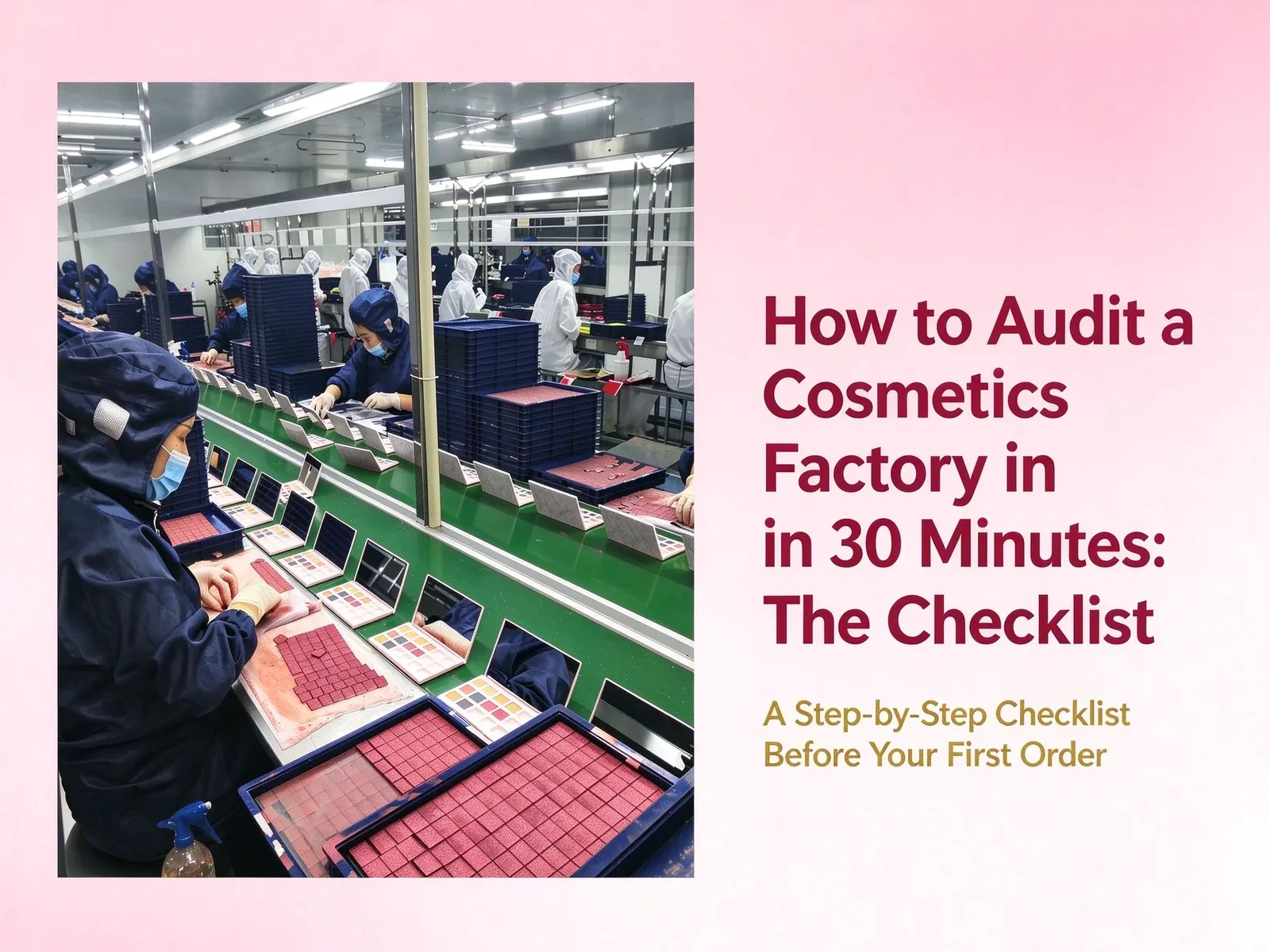
A factory visit is not an inspection report, and thirty minutes will not replace a full quality audit. What thirty minutes can do is separate a working production site from a well-dressed showroom - and tell you whether a second, deeper visit is worth the trip. Here is the checklist, in the order that saves the most time.
Before You Walk In: The Paperwork That Saves Time
Start with the file, not the floor. Ask for the business licence, and for the GMP and ISO 22716 certificates that cover the production site - the certificate should show the site name, the product scope and the expiry date. A trading company and the factory that produces for it are usually different legal entities, so match the certificate to the site you are standing in, not just to the company name on the invoice.
Also ask to see one complete batch record from a recent order: who mixed, who filled, who checked, and what the QC results were. If a batch record cannot be produced on the spot, note it - it is the single most useful document in cosmetics.
The First Ten Minutes: Cleanroom Discipline
Walk the gowning route exactly as staff do. Look at the airlock, the hand-wash point and the state of the changing room. Then watch the line for five minutes without talking: gowns worn correctly, hair and masks covered, no food or phones on the floor, waste separated from product.
Small things predict large ones. A clean gowning room usually means cleaning schedules exist; a pile of open boxes beside a filling line usually means they do not.
Minutes Ten to Twenty: The Line Itself
Check the filling line in three places. At the hopper, look for a cleaning-status label with a date and initials. At the scale or filler, look for a calibration tag that is still in date. At the output, look at the units: is the batch code printed on the inner unit, not only the carton? That code is what your retailer will rely on if a customer asks when the product was made.
Ask how often in-process checks are taken and where the results are recorded. A line that can show today's filled-in check sheet runs on process, not memory.
Minutes Twenty to Thirty: QC, Warehouse and Packing
In QC, look for a calibrated balance, retained samples from past batches and a stability area where formulations are kept under heat and light. In the warehouse, look for a clear split between quarantined and released stock, temperature control where it matters, and a first-in-first-out rule you can see working.
End at packing: carton counts per case, tape and drop protection, and whether finished goods are stored off the floor.
Five Questions to Ask on the Way Out
One: which site will produce my order, and can I see its certificate? Two: what documentation ships with each batch? Three: how do you handle a defect claim after delivery? Four: who owns the formula, and what happens to my tooling if we stop working together? Five: what would you change in this factory if it were yours?
A supplier who answers precisely, including the weak points, is easier to build a season around than one who answers everything with a brochure.
If you are comparing suppliers before a first order, send us your target product and quantity - samples are ready in 14 days, and we will walk you through the production site and its certificates the same way.