Nov 1, 2026Buying Guides
Red Flags: 7 Warning Signs a Cosmetics Supplier Looks Too Good to Be True
Seven warning signs that a cosmetics supplier may not be what the website claims - from prices below component cost to certificates without a site name - and how to check each one.
Most bad sourcing decisions are visible before the deposit is paid. The signs are rarely dramatic; they are small inconsistencies that are easy to explain away one at a time. Here are seven we would treat as a stop-and-check.
1. A Price Below the Component Cost
Cases, caps and cartons have a market price. If a quotation lands well below what the packaging alone should cost, something is being left out - material grade, QC, or the product itself. Ask for the component specification; a supplier who cannot name the material is guessing.
2. Certificates Without a Site Name
A GMP or ISO 22716 certificate names the address it covers. If the certificate is a badge on a website, or shows a different company and site from the one producing your order, ask which site will actually make the goods and request that site's certificate.
3. No Samples, or Samples That Cannot Be Explained
A supplier who cannot send a sample, or cannot tell you which line and which batch the sample came from, is asking you to buy a photograph. Samples take about 14 days on the lines we work with; a supplier who needs months, with no reason, is hiding a step.
4. No Batch Records, No Traceability
Ask for one batch record from a recent order. It should show mixing, filling, checks and results. "We do not share those" is an answer about documentation culture, and documentation is what protects you when a customer complains.
5. Payment Pushed Entirely Up Front
Deposits are normal. A demand for the full amount before any material is ordered, especially to a personal account, removes every lever you have. Agree milestones in writing, and use terms you can enforce - T/T, L/C or PayPal each buy something different.
6. Vague Specifications
A real spec sheet states fill volume, components, carton count and packing standard. If those numbers are missing, the quotation cannot be compared - and the difference will surface as a shortfill or a repack at your warehouse.
7. Photographs That Are Not Theirs
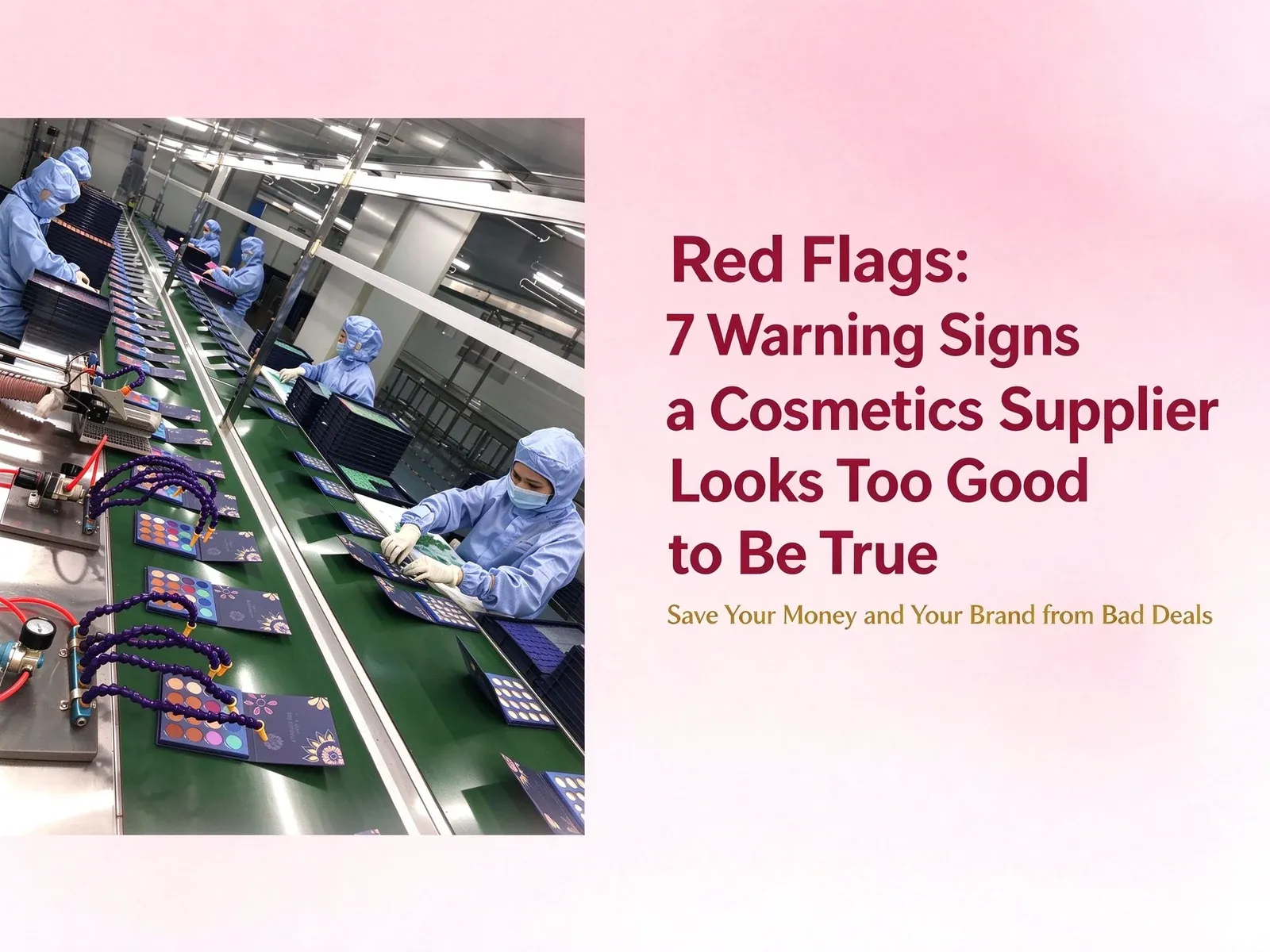
Search the images on a supplier's page. Catalog photos, other brands' products and stock photography are common. Ask for a short video walk of the line producing your item. A trading partner should be able to show you the partner factory's floor; a reseller cannot.
What Good Looks Like
The opposite of all seven is not perfection - it is precision. Clear component names, a certificate with a site name, a sample with a batch reference, written payment milestones and a spec sheet you can compare. Precision is cheap to check and expensive to fake.
If you want to see how those answers look in practice, send us your product and quantity - we will reply with the site, the certificate and a sample plan in writing.