
Oct 27, 2026OEM & ODM
GMP, FDA, ISO & MSDS: Which Certificates Actually Matter for Your Order
GMP, ISO 22716, FDA registration and MSDS are often quoted as one package. They are four different things, held by different parties. What each one covers, and which papers to ask for.
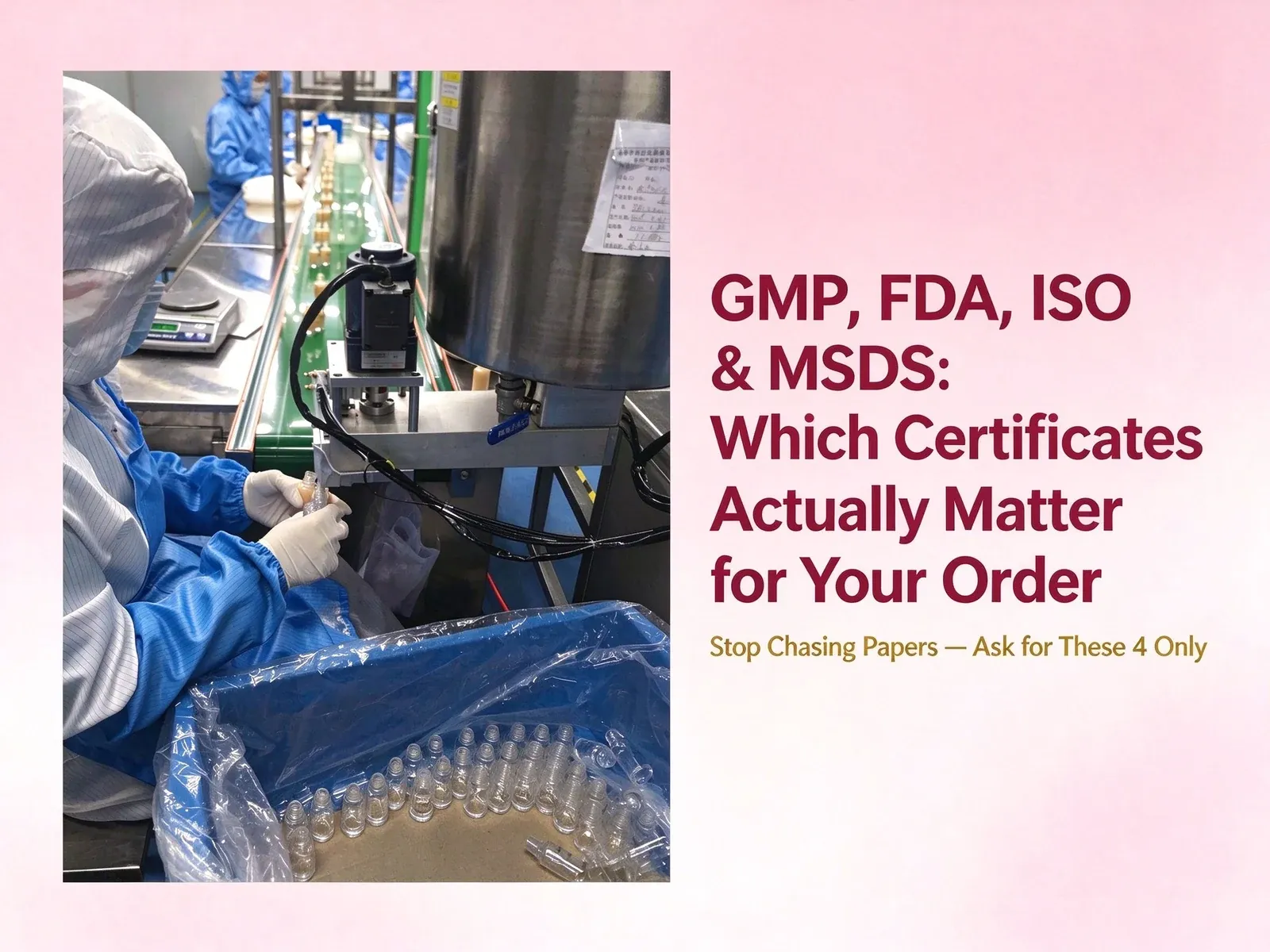
Ask three suppliers for their certificates and you will receive three different bundles of paper. Some of it is essential, some of it is context, and some of it is decoration. Here is what each document actually is.
GMP: The Manufacturing Practice
GMP stands for Good Manufacturing Practice. It is an inspection of how a site makes product: premises, equipment, documentation, hygiene, staff training and batch traceability. It is site-specific - the certificate names the address it covers. For cosmetics, the internationally recognised version is ISO 22716, and a factory that holds it will have a certificate with a site name, a product scope and an expiry date.
If you buy from a trading company, ask which site produced your order and request the certificate for that site. A trading partner handles sampling, artwork, production scheduling and export documents; the factory holds the production certificate.
ISO: Which Standard, Exactly
ISO is a family, not a single badge. ISO 22716 is the cosmetics GMP standard; ISO 9001 is a general quality-management standard. Both are useful, but they answer different questions. When a supplier lists ISO certifications, ask for the number and the scope - and read the expiry date.
FDA: A Regulator, Not a Certificate
For cosmetics sold in the United States there is no "FDA certificate" in the sense buyers often expect. The FDA regulates cosmetics: facilities register and product listings are filed, labels must comply, and under MoCRA the responsible person and safety substantiation requirements apply. A supplier can help with registration and labelling, but an "FDA certified" badge on a website is a phrase, not a document. If someone offers you one, ask what it actually says.
MSDS: For Handling, Not for Shelf Appeal
A Material Safety Data Sheet - now usually called an SDS - describes how to handle and transport a substance safely. It is required for shipping and for warehouse safety. It is not a quality certificate and says nothing about how good the product is on a counter. Keep it in your logistics file, not your sales deck.
What to Ask For, and How to Read It
Ask for: the GMP / ISO 22716 certificate for the exact production site, valid and in scope; the SDS for each formulation you ship; and, for the US, confirmation of registration and label compliance. For the EU, ask about the CPNP notification, the responsible person and the CPSR.
Then read the fine print: site name, scope, expiry. A certificate is only useful if it covers the building that made your goods.
Our partner factories hold GMP and ISO 22716 certification, and we will send the certificates for the site producing your order together with the quotation - so you can check the paper against the product.