Oct 21, 2026Buying Guides
Who Holds the GMP Certificate? Trading Company vs Factory
If you buy through a trading company, the certificate you are shown may belong to a partner factory. That is normal. Here is how to check it, and what to ask for in a quote.
Why the certificate name does not always match the seller
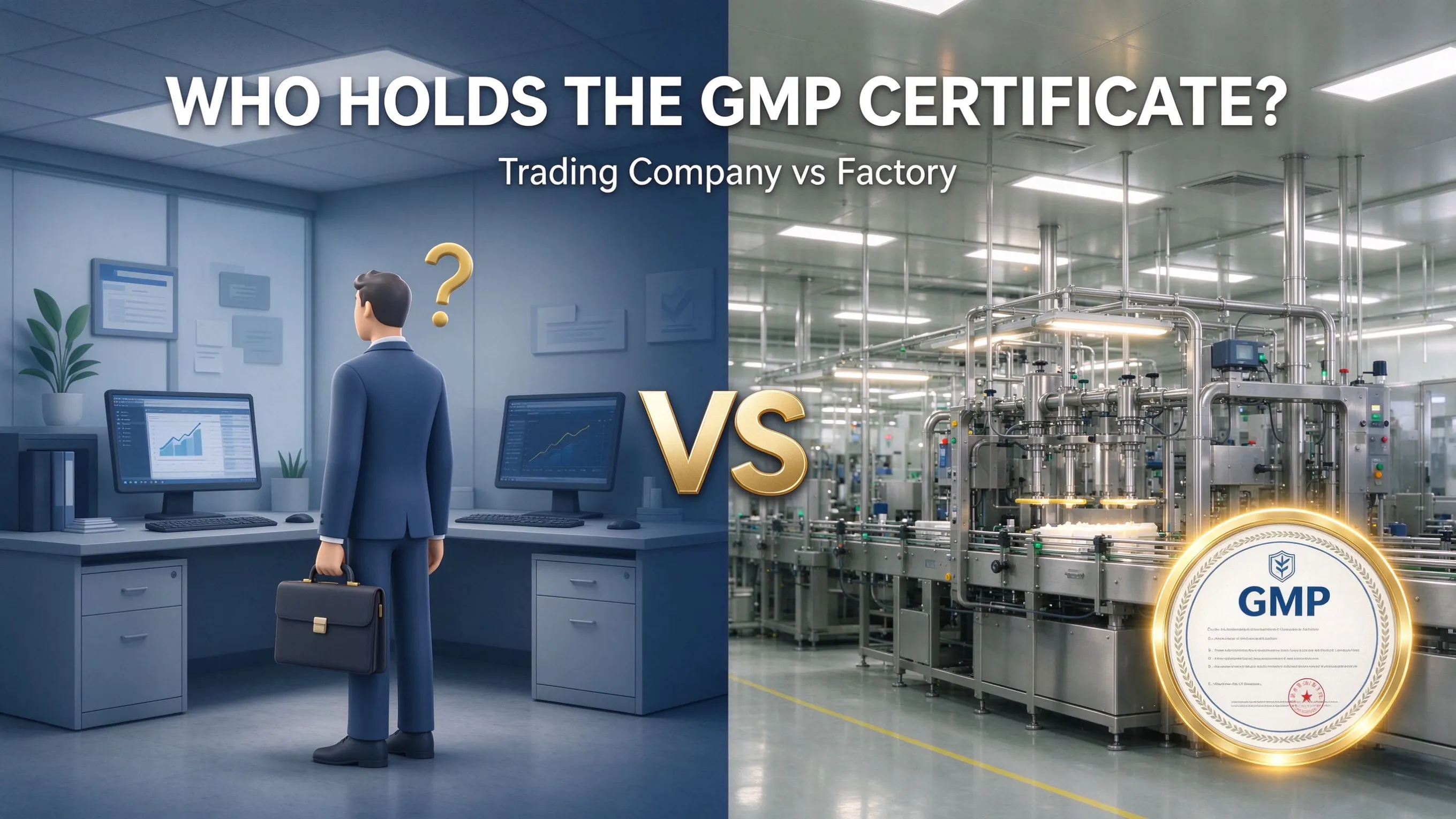
A buyer asks for the GMP certificate, receives a document, and notices the company name is not the one on the invoice. That is not automatically a problem. Trading companies coordinate production across partner factories, and the certificate belongs to the site that makes the goods. The useful question is not who printed the certificate, but which factory it covers and whether your order will run there.
What a trading partner actually does
A trading partner handles sampling, artwork, packaging sourcing, production scheduling, quality checks and export documents, and places the order with a factory that is set up for that product. The factory holds the production certificates; the trading partner is accountable for the order, the specification and the delivery.
What the certificate covers
A GMP or ISO 22716 certificate covers a specific site, a scope of products and a validity period. Ask for the certificate with the site name, the scope and the expiry date visible, and ask which site will produce your order. If the answer is a partner factory, the certificate should match that site.
What to ask for in a quote
Three things make the answer easy to check: the production site for your order, the certificates that site holds, and who signs the quality documents. A supplier who answers all three in writing is easier to work with than one who sends a folder of certificates without a site name.
How audits work with partner factories
When a buyer needs an audit, it is arranged at the production site, not at the trading office. The trading partner coordinates the visit, prepares the documents and follows up on findings. That arrangement is common in the industry and works as long as the site is named in advance.
Red flags worth noticing
A certificate with no site name, an expired validity date, a scope that does not include your product type, or a refusal to name the production site are all reasons to slow down. None of them means the supplier is dishonest; they mean the paperwork is not yet specific enough to rely on.